You’ve probably typed “how much is microneedling” into Google, seen something like “$100 to $1,000,” and walked away more confused than when you started.
That range is technically true. It’s also almost useless.
Here’s the thing: the price of microneedling in 2026 isn’t one number. It’s a spread that depends on where you live, who’s holding the device, what kind of device it is, and — this is the part most articles skip — what quietly gets added to your bill after you walk in the door.
This guide is going to break all of that down. Real numbers, in real dollars and pounds, with the hidden costs laid out so there are no surprises.
What You’re Actually Paying For
Before the numbers, a quick primer — because it’s easier to judge whether a price is fair when you know what the treatment actually is.
Microneedling uses a device covered in tiny, sterile needles to create hundreds of controlled micro-punctures in the top layer of your skin. That sounds worse than it is. The needles are a fraction of a millimeter wide, and the punctures are shallow enough that your skin heals them within a day or two.
The point of those micro-injuries is to trick your body. Sensing the damage, your skin kicks its repair process into gear and starts producing fresh collagen and elastin — the proteins that keep skin firm and smooth. That’s why the treatment is also called collagen induction therapy. The needles don’t deliver anything on their own; they just nudge your skin into rebuilding itself.
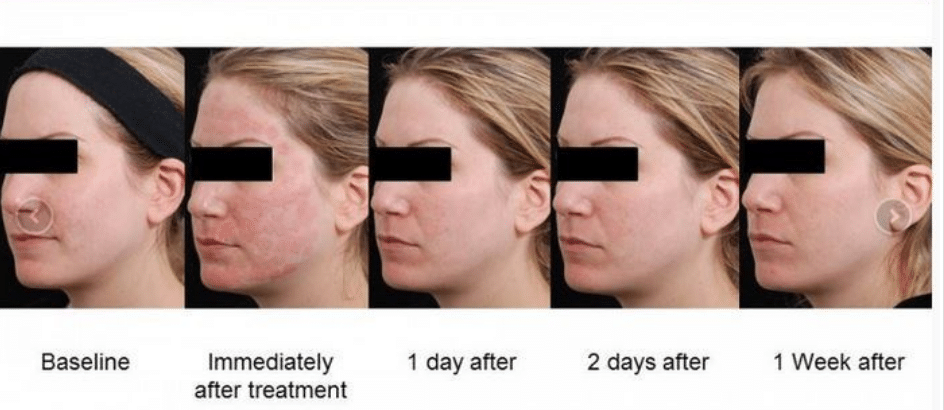
And the results build slowly. Over weeks and months, not hours. Minimal downtime, though, which is a big part of why it’s become one of the most popular non-surgical treatments around.
Microneedling Cost at a Glance: 2026 Price Ranges
Let’s start with the numbers people actually want.
Microneedling — sometimes called collagen induction therapy — has drifted upward in price over the last couple of years. Not dramatically, but enough that the old “$200 average” you might remember is outdated. Part of it is inflation. Part of it is that clinics now routinely pair the treatment with pricier serums, exosomes, or radiofrequency (RF) energy to boost results.
Here’s roughly what you’re looking at in 2026, with US prices first and UK prices for comparison:
| Treatment Type | US (per session) | UK (per session) | What it includes |
|---|---|---|---|
| Standard microneedling | $250 – $500 | £100 – £300 | Mechanical needling, usually with hyaluronic acid serum |
| PRP microneedling (“Vampire Facial”) | $700 – $1,200 | £180 – £400 | Standard needling + your own platelet-rich plasma |
| RF microneedling | $800 – $2,000+ | £250 – £600 | Needling + radiofrequency heat for deeper tightening |
And those are per-session numbers. Most people need more than one session, which we’ll get to.
Notice something? The gap between a $250 standard session and a $2,000 RF session is huge. That’s not price gouging — well, mostly not. They’re genuinely different treatments using different equipment. But the spread is exactly why the “average cost” number is so misleading.
What You’ll Actually Pay: The Real Receipt
Here’s where most clinics and most articles get vague on you.
A clinic advertises “microneedling from $350.” Sounds reasonable. You book. Then the bill comes out different. Why?
Let me show you a realistic walk-out receipt for a standard face treatment in a US city, because nobody ever shows you this part:
- Standard microneedling, full face — $350.00
- Topical numbing cream (the strong stuff) — $25.00
- Post-care recovery kit (medical-grade, not drugstore) — $65.00
- Sales tax, roughly 8% — $35.20
- Gratuity for the esthetician, 20% — $70.00
- Total walk-out price — $545.20
The advertised price was $350. You paid $545. That’s a 55% difference, and not one of those add-ons was a scam — they’re just real line items that don’t make it into the “from $350” banner.
The rule of thumb: the sticker price is usually only 60–70% of what you’ll actually pay. Budget for that extra third, and you won’t be caught off guard.
The Five Factors That Set Your Price
So why does the same treatment cost twice as much at the clinic down the street? It’s not random. Five things move the number, and once you know them, the pricing starts to make sense.
1. Where you live. This is the biggest one. Rent and labor drive the price more than anything else.
- In New York, Los Angeles, or London, a standard session usually starts around $400 / £150–£400. High-end neighborhoods push higher still.
- In smaller cities or the suburbs — the US Midwest, Texas, Manchester, Leeds — the same treatment might run $200–$300 / £80–£250.
Some people travel for it now. Medical tourism to places like Korea or Thailand can bring the per-session price down to a third of US rates, but then you’re paying for flights and taking on the risk of chasing aftercare across a time zone. Whether that math works is a personal call.
2. Who’s holding the device. An esthetician or nurse charges less. A board-certified dermatologist often charges 50–100% more. Is the doctor worth it? Sometimes — especially for deep acne scarring, where adjusting needle depth on the fly takes real clinical judgment. For light textural concerns, a skilled esthetician is usually plenty.
3. The equipment. This one gets overlooked, and it’s the one that matters most for your results. More on this below, because it deserves its own section.
4. The treatment area. Face is the baseline. Add the neck, chest, or hands, and you’re paying per zone. Larger areas — stomach, thighs, stretch marks — cost more because they take more time and more product.
5. How many sessions you commit to. Single sessions are always the most expensive per visit. Packages of three or six usually knock 15–20% off the per-session price.
Why the Same Treatment Costs $99 in One Place and $300 in Another
If you’ve shopped around, you’ve seen the $99 special and wondered what the catch is. There’s usually a catch. Let me explain what it actually is.
Cheap microneedling tends to run on cheap machines. And the thing about a low-cost microneedling pen is that the motor isn’t stable. When the motor runs at speed and starts to shake, the needles stop going in straight. Instead of clean vertical punctures, they drag — kind of like a hook tearing at the skin instead of a pin pressing straight down.
That means more pain. Longer healing. Worse results, even though the treatment looked identical on paper.
A professional device costs more to build for reasons you can actually verify. The needle cartridge is medical-grade. The motor is precise enough to hold a consistent depth. The machine is tested to survive thousands of uses without drifting out of spec. That’s the difference between a device that punctures the dermis cleanly and one that shreds the surface.
Here’s the part most consumers never hear: when you’re paying $300 instead of $99, a chunk of that isn’t going to the clinic’s rent. It’s going to the equipment. Clinics that invest in professional-grade machines — the kind built by actual manufacturers rather than drop-shipped off a marketplace — are paying for consistency. Consistent depth, consistent results, consistent safety.
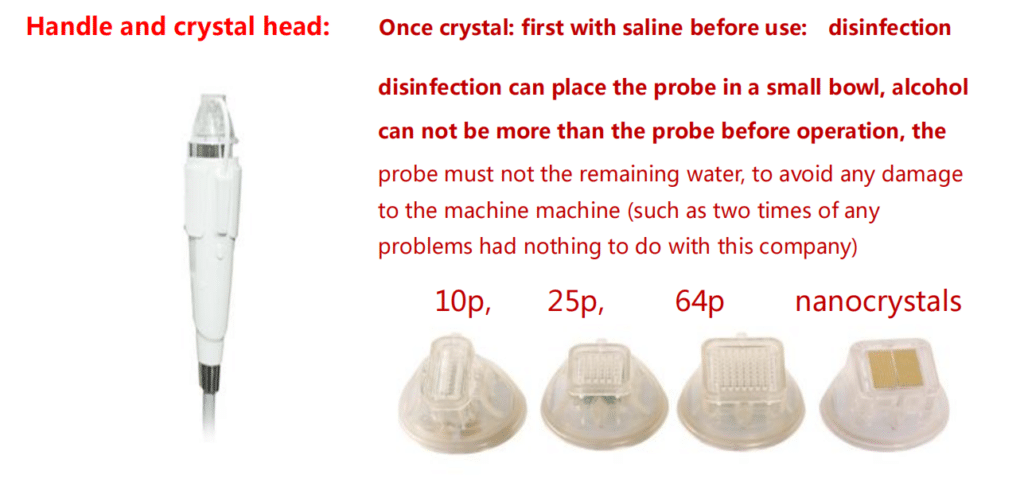
Take VIVAHIFU, a manufacturer of professional microneedling equipment, as an example. They’ve been building this equipment since 2003, out of a 6,000-square-meter factory with ISO, CE, and FDA certification. But the detail that actually matters to your skin is this: most factories only make the machine itself and buy their needle cartridges from somebody else. VIVAHIFU makes both — the device and the needles — under one roof, and builds for other brands too. The needle is the only part that touches your face, so that’s exactly where corners get cut.
And the needles themselves have gotten smarter than most patients realize. Their tips come in multiple needle counts depending on the concern, and in insulated and non-insulated versions — insulated needles for RF microneedling, so the radiofrequency heat goes deep without burning the surface. The newest ones build cooling directly into each tip, which takes a real edge off the discomfort of a session. You won’t see any of this on a price list, but it’s precisely what your money is buying.
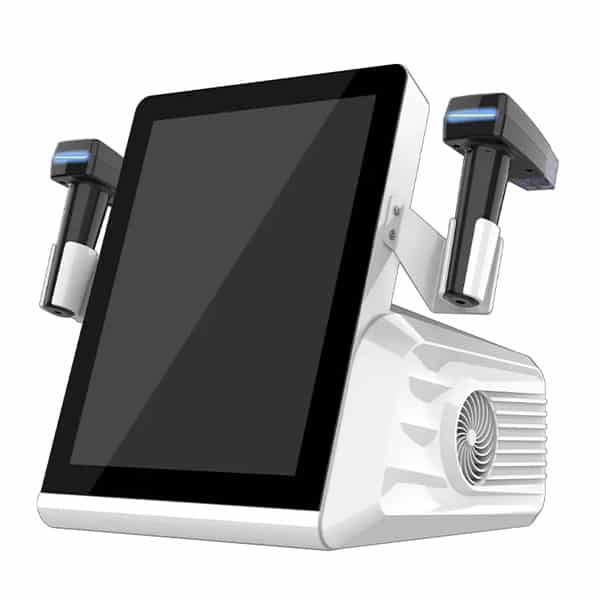
That’s the whole reason the equipment question matters. If you’re going to let someone put dozens of tiny needles into your face, you want to know the machine was built by someone whose entire business depends on it working correctly every single time, not a rebranded gadget from a warehouse. Professional microneedling machines and RF microneedling machines are a different class of hardware from what powers a $99 Groupon special — and the difference shows up on your face.
Standard vs PRP vs RF: Which Upgrade Is Worth It?
The three tiers aren’t interchangeable. Here’s the honest version of who should pick which.
Standard microneedling is the workhorse. If your concerns are enlarged pores, mild acne marks, or just wanting smoother, more even texture, this is probably all you need. Don’t let anyone upsell you past it.
PRP microneedling — the “vampire facial” — adds a step where they draw your blood, spin it to isolate the platelet-rich plasma, and apply it to the skin after needling. The idea is the growth factors in your own plasma speed up healing and boost collagen. It’s genuinely good for people with dullness, fine lines, and mild scarring, but it costs two to three times as much. The evidence says it helps; whether it helps enough to justify the price is honestly a judgment call.
RF microneedling is the top tier. It adds radiofrequency heat to the mechanical needling, which tightens skin from the inside. This is the one to consider for deeper wrinkles, significant acne scarring, or laxity — the stuff standard needling only nudges. It’s also the most expensive, and the results can be genuinely dramatic. If you’re under 30 with no real scarring, you’re paying for a sports car to drive to the grocery store.
How Many Sessions Do You Need?
Almost nobody gets the result they want from one session. Collagen doesn’t build overnight.
Most people need three to six sessions, spaced four to six weeks apart, to see the kind of change that shows up in photos. That’s the timeline your skin needs to lay down new collagen between treatments.
Do the math on the total, not the single session. Three standard sessions at $300 each is $900. Three RF sessions at $1,000 each is $3,000. The single-session price was never the real cost of the treatment — the course is.
And this is where packages matter. If a clinic offers three sessions for $750 instead of $900, that’s the honest price. If you’re going to commit to a course anyway — and you should, for acne scars especially — buy the package.
Microneedling vs Lasers vs Fillers: Cost & Value Compared
Microneedling feels expensive until you compare it to the alternatives. Let’s look at the full picture, because the sticker price alone is misleading:
| Treatment | Avg price per session | Sessions needed | Total cost | Downtime | Bottom line |
|---|---|---|---|---|---|
| Microneedling | $300 | 4–6 | $1,200 – $1,800 | 2–3 days redness | Best value, safe for most skin types |
| RF microneedling | $1,000 | 3 | $3,000 | 1–2 days | Better tightening, deeper anti-aging |
| Fractional laser | $1,500 | 1–2 | $1,500 – $3,000 | 5–7 days (scabs) | Strongest for severe scars, painful recovery |
| HydraFacial | $200 | Monthly | $2,400 / year | None | Cleans and hydrates only, no collagen build |
| Thermage | $2,500 | 1 | $2,500 | None | Lifting focus, weak on scars and pores |
Here’s the pattern: microneedling costs more visits but usually less money than lasers or surgery, and with way less downtime. It trades time for dollars. If you can wait three to six months to see the full result — and you’re not trying to treat deep, ice-pick scarring that really calls for a laser — it’s the high-value option.
At-Home Derma Rollers vs Professional Treatment
Type “derma roller” into Amazon and you’ll find one for $20. Next to a $300 clinic visit, it looks like the clinic is robbing you.
Not so fast.
Home rollers work differently. When you roll one across your face, the needles go in and out at an angle — more like a shovel than a punch. That creates V-shaped tears that heal slower. A professional electric pen drives the needles straight down at high speed, dozens of times a second, making clean micro-wounds that heal fast and trigger collagen properly.
Then there’s the hygiene problem. A clinic sterilizes its needles and opens a fresh cartridge for every client. Your bathroom is not sterile, and a $20 roller that’s been sitting in a drawer is exactly the kind of thing that causes a staph infection. If that happens, you’re not saving $280 — you’re paying $500+ for antibiotics and a dermatologist, and you might be left with a scar worse than the one you were trying to treat.
The sensible middle ground: if your budget is tight, use a gentle at-home device for product absorption only. Keep the needle depth shallow, replace the head often, and never chase bleeding. Leave the deep work to a professional.
Insurance & Financing: Will Anyone Help Pay?
Short answer on insurance: usually no.
Microneedling is classed as a cosmetic procedure, and insurance companies don’t cover cosmetic procedures. There’s a narrow exception: if you’re treating disfiguring scars from an injury or surgery, and a doctor can document that it’s reconstructive rather than cosmetic, you might be able to use HSA or FSA funds. That’s rare, so don’t count on it.
Financing is more realistic. Since a course of microneedling often runs $1,000+, most US clinics accept third-party financing like CareCredit, Cherry, or Affirm. A $1,200 course split over 12 months comes out to about $100 a month. That’s how a lot of people make it work — not by finding a $99 deal, but by paying the real price over time.
Frequently Asked Questions
How much does one microneedling session cost?
A standard face session runs $250–$500 in the US and £100–£300 in the UK. Add-ons like PRP or a larger treatment area push it higher. The advertised price is usually 60–70% of what you’ll actually pay once aftercare, tax, and gratuity are added.
How many microneedling sessions will I need?
Most people need three to six sessions, spaced four to six weeks apart, to see meaningful improvement. Acne scarring and deeper texture issues sit at the higher end of that range.
Does microneedling hurt?
With numbing cream, most people describe it as uncomfortable rather than painful — a scratchy, sandpaper-like sensation. RF microneedling runs hotter and is more intense, but clinics usually numb more heavily for it.
How much downtime is there?
Expect redness and mild sensitivity for 24–72 hours, like a sunburn. Most people can return to work the next day. Deep microneedling (over 2.0mm) can leave you red for a couple of days.
Is microneedling safe for darker skin?
Yes — this is one of its real advantages. Unlike some lasers, microneedling doesn’t target melanin, so it’s safe across Fitzpatrick skin types when done at the right depth by a trained professional.
Will my insurance cover microneedling?
Almost never. It’s a cosmetic procedure. Reconstructive treatment of injury or surgical scars can occasionally qualify for HSA or FSA funds, but that’s the exception.
How long do microneedling results last?
The collagen you build is your own, so results can last months to years. Most people do a maintenance session every six to twelve months to keep it up.
Is RF microneedling worth the extra cost?
If you’re treating deeper wrinkles, laxity, or significant scarring, yes — the added radiofrequency heat produces tightening that standard needling can’t. If your concerns are mild texture or pores, save your money and stick with standard.
The Bottom Line: Is Microneedling Worth It?
Let’s come back to the question you actually care about.
If you’re expecting a $300 treatment to give you a facelift — ten years off, overnight — then no, it’s not worth it, and nothing short of surgery would be.
But if what you want is real, gradual change — smoother texture, smaller-looking pores, faded acne scars, skin that’s genuinely firmer than it was six months ago — then microneedling is one of the best-value treatments out there. It costs less than lasers, carries less risk than surgery, and works on a wider range of skin tones than most alternatives. The trade-off is time: you wait three to six months to see the full payoff, and the results come in stages, not all at once.
One last piece of advice, and it’s the one thing I’d want my own friends to do before they book: ask what equipment the clinic uses. Not the brand of the serum, not the name of the treatment — the actual machine.
The clinic that can tell you, without hesitation, that they use a professional-grade device from a reputable manufacturer is the clinic that’s invested in results over margins. The one that dodges the question, or waves vaguely at “the same machine everyone uses,” is telling you something too.
Ready to see what a professional microneedling setup looks like? Browse our microneedling machines and RF microneedling machines — the hardware behind the results.